The Chicago Tribune explored the growing foreclosure crisis in Chicago with a Sunday Tribune cover story showcasing the problem in both the south and north sides of the city.
As foreclosures soar to historic levels, the infection has spread beyond places of perennial concern, such as West Garfield Park and Englewood.
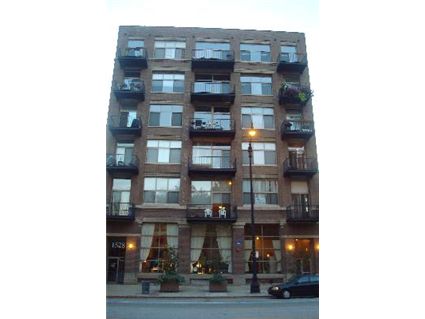
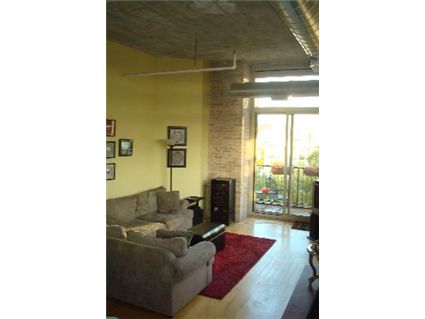
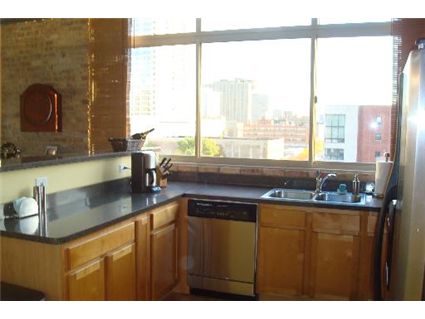
Condo ghost towns replete with granite and stainless steel have emerged on stretches of the North Side, leaving a pox of hollow buildings dotting the landscape.
“We’re kind of in an unprecedented moment,” said Philip Ashton, an assistant professor of urban planning at the University of Illinois at Chicago. “A lot of the research that is on the table relates to a completely different world.”
“Condos do present a different challenge, but it still is not at all at the same scale,” said Ellen Sahli, first deputy in Chicago’s Department of Community Development.
Not at the scale of neighborhoods such as Humboldt Park, where more than half of the loans issued in 2006 and 2007 qualified as subprime and unemployment hovered around 11 percent in 2007, according to city data. There, gangs often take over abandoned homes, peeling back the bowed plywood from the windows to store drugs and set up shop, residents say.
“When we first moved over here it was a nice, mixed neighborhood,” said Barbara Carter, who has lived on her block more than 20 years and has seen some of the neighborhood’s elderly lose their homes. “Now, it’s been so many shots [fired] at my house I ain’t got fingers to count.”
As we’ve chattered about here before, foreclosures are especially spiking in Rogers Park where there were simply too many condo conversions. With the current market downturn, the smaller developers can’t hold on and many are facing foreclosure.
What about those homebuyers who have already bought a unit in those buildings in trouble?
The half-empty Rogers Park condo building at 1633 W. Farwell Ave. shows the breadth of the foreclosure crisis in many different ways.
Miller’s building has 39 units—20 are vacant, foreclosed on after the builder couldn’t sell them. Rogers Park saw 288 foreclosures in 2008, a 157 percent increase from 2007. Eighty percent of those were condominiums.
Some builders estimate there is two years worth of housing stock for sale in Rogers Park thanks to overdevelopment and rapid, unregulated conversions.
Other areas seeing spikes include Lincoln Square, where foreclosures rose nearly 134 percent from last year; two-thirds were condo units.
Foreclosures spur neighborhood ghost towns [Chicago Tribune, Azam Ahmed and Darnell Little, Feb 22, 2009]
Deserted condo units test those who remain [Chicago Tribune, Feb 22, 2009]
In Washington Park, condo boom went bust [Chicago Tribune, Feb 22, 2009]
Vacant homes offer ominous view of Chicago Lawn [Chicago Tribune, Feb 22, 2009]