Get a 2-Bedroom Triplex Loft for $599,000 in Lincoln Park: 1001 W. Altgeld
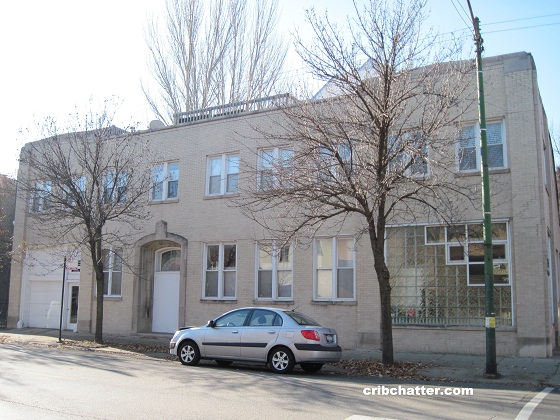
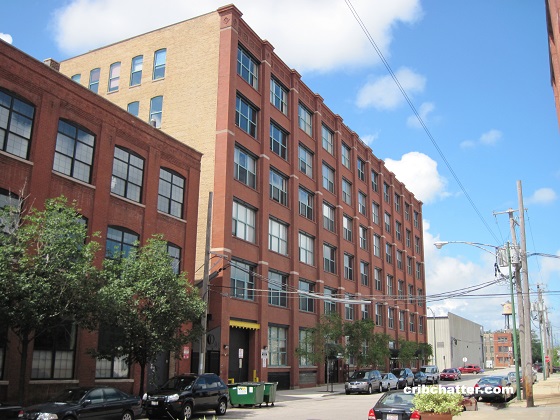
This 2-bedroom triplex loft in the Soda Pop Factory at 1001 W. Altgeld in Lincoln Park just came on the market.
The listing calls it the Lasser Soda Pop Factory but other listings have always just called it the Soda Pop Factory but Lasser was a big soda pop maker in the city until the 1980s.
I don’t know when the building was constructed but it was converted into 9 loft units with a central courtyard and parking in 1987.
This listing says this unit is the largest in the complex at 1800 square feet on 3 levels.
It has a private entry into the living/dining room which has tall ceilings and exposed brick walls.
The kitchen is on the second floor and has white shaker cabinets, granite counter tops and stainless steel appliances.
The two bedrooms are on the third floor and both have bathrooms.
The master suite has his and hers closets and an updated master bath.
There’s a family room in the lower level with a gray wood-looking vinyl floor.
The listing says there are interior stairs to the rooftop deck with views of the Lincoln Park area.
It has the features that buyers look for including central air, washer/dryer in the unit and there is an attached garage.
This triplex loft is just steps from the Fullerton El stop and the Whole Foods as well as DePaul University.
Listed at $599,000, is this a good alternative to a townhouse?
Anne DuBray at Coldwell Banker has the listing. See the pictures here.
Unit #1: 2 bedrooms, 2.5 baths, 1800 square feet, triplex
- Sold in 1987 (no price given)
- Sold in June 2005 for $500,000
- Sold in June 2006 for $535,000
- Sold in September 2009 for $480,000
- Sold in April 2017 for $538,000
- Currently listed for $599,000
- Assessments of $511 a month (includes cable, Internet, exterior maintenance, lawn care, scavenger, snow removal)
- Taxes of $10,688
- Central Air
- Washer/dryer in the unit
- Attached garage included
- Wood burning fireplace
- Bedroom #1: 23×13 (third floor)
- Bedroom #2: 15×9 (third floor)
- Living/dining: 23×13 (main floor)
- Kitchen: 17×9 (second floor)
- Family room: 21×13 (lower level)
- Deck: 26×18 (fourth level)