Market Conditions: Will the 2nd Round of Looting Cause Condo Owners to Flee Downtown?
A few months ago, there was a lot of discussion about city dwellers fleeing big cities for the suburbs because of COVID-19.
There’s evidence that this is the case in New York City, but so far, despite trying to find examples of it, Chicagoans seemed okay with staying in the city despite the pandemic.
But August has seen a second round of looting in the Loop, the South Loop, the Mag Mile and the Gold Coast which has resulted in downtown curfews again.
And now, according to Crain’s, some downtown residents are having second thoughts about where they live.
Jennifer Ames, a partner at North Side real estate brokerage Engel & Volkers, has had calls recently from Chicago clients who have found homes in Montana and Boulder, Colo., to purchase.
“They want to sell their houses here,” Ames says. “People are now shifting ideas about where they want to live and work. Some are deciding they no longer have to be in a city center. The latest violence has prompted people to consider new options for the first time.”
Despite the initial round of smash-and-grab destruction in late May, downtown transactions began to inch back up in June and July as the city entered a more relaxed Stage 4 of recovery from the pandemic. Now, some residential brokers say, the market in August has gone cold again with little hope for a recovery soon.
“A lot of the sales downtown are to either empty nesters or second-home buyers drawn to the museums, theater, restaurants and pro sports here,” says Michael Michalak, a RE/MAX broker in Lincoln Park. “But all of that is closed now. Even with mortgage interest rates below 3 percent, potential buyers are looking at all this crime and deciding to put deals on hold.”
A closer snapshot of particular submarkets shows evidence of a downturn not seen since 2008-10. In the Loop itself this year so far, transactions are down over 30 percent to a mere 347 units compared with the same period last year. Lincoln Park sales were down 31 percent, while in the River North neighborhood condominium sales priced above $1 million were down 37 percent. At lower prices the downturn was more muted, with condo sales under $500,000 in the Near North down 15 percent so far this year, for example.
Until now, price reductions have been modest, mostly falling 5 percent or less, observers say. But some brokers see further declines coming. “People are waiting for lower prices,” says Pat Tobin, president of Tobin Real Estate Advisors based near Millennium Park. “Could prices fall another 5 to 10 percent this year? It’s hard to say, but it certainly could happen.”
But what about the neighborhoods?
They have largely gone untouched by the looting, with the exception of North & Clybourn’s Best Buy in this latest round.
Will Millennials still buy condos in Lakeview?
Ames, the broker, still sees signs of optimism. She listed a two-bedroom house in Jefferson Park recently at $289,000 and within 24 hours fielded a half-dozen offers. She expects the sale to close soon at more than $300,000. She also has a home on a double lot in Lakeview whose sale is pending after receiving multiple offers. The asking price was $2,995,000. “If you live in a high-rise in the Loop and must take an elevator up and down, then your condo is going to be harder to sell,” Ames says. “But if you’re farther north with some yard for kids to play in, that still looks good to families enduring this pandemic.”
Will there be big inventory coming online in the downtown that will lead to significant price declines?
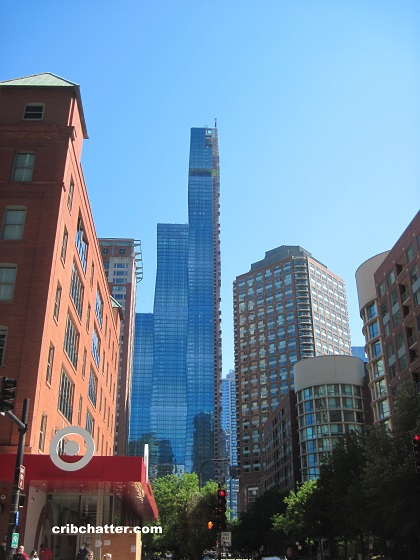
And what happens with all the new condos coming online including the Vista’s 400 units and the rehabbed Tribune Tower?
Will this be 2008-2012 all over again?
Homeowners questioning city life after this week’s unrest [Crain’s Chicago Business, By H. Lee Murphy, August 11, 2020]