The Feb 28 issue of the Chicago Journal had statistics about the Chicago luxury housing market in Don Debat’s column called “Market is still alive.” From the Chicago Journal:
“Although the news media would have you believe the sky is falling, an examination of two segments of the upper end of the housing market-properties listed for more than $1 million-dispel that notion,” said Gold Coast sales agent Louise Study, a 14-year veteran at Rubloff Residential Properties.
Study, who compiles an annual MLS resale home study of about a dozen Chicago neighborhoods, noted the following price stability in the luxury home and condominium marketplace:
388 upper-bracket single-family homes sold in 2007 for an average price of $1,716,713 with an average market time of 179 days. That compares with 434 luxury homes sold in 2006 for an average price of $1,673,223 with an average market time of 149 days.
393 luxury condominiums sold in 2007 for an average price of $1,636,726 with an average market time of 208 days. That compares with 393 upper-bracket condos sold in 2006 for an average price of $1,757,204 with an average market time of 210 days.
The statistics are complied from re-sales of more than $1 million in the following areas:
“These statistics covering luxury resales in such neighborhoods as the Gold Coast, Lincoln Park, Lakeview, Bucktown, Roscoe Village, Wicker Park, Hyde Park, Ravenswood, Andersonville, the South Loop and West Loop demonstrate that Chicago’s high-end market did not suffer a bubble that occurred in other markets across the country,” Study noted.
You would expect market times to be rising, given the sheer number of units coming onto the market in that price range. If you do even a basic search of the MLS, there are dozens of empty homes in Lakeview, Bucktown and Lincoln Park. There doesn’t seem to be any demand for those.
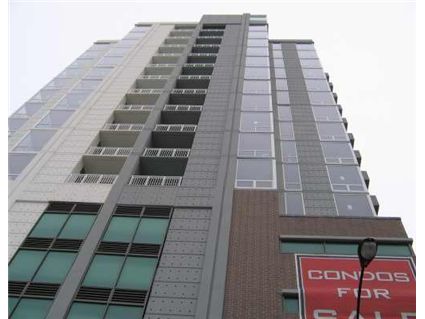
Just a quick search of the MLS for the Loop shows that there are 125 condos over $1 million. Some are not ready for occupancy (the units in The Legacy or WaterView Tower, for instance), but they’re all being built and will have to be occupied at some time.
I wish this article would have talked about inventories.
The key to the health of the market will be market times.