Here on Crib Chatter, we’ve been debating what’s going to happen to Chicago’s real estate market this year.
What will happen to all the luxury apartment rentals that have been going up downtown for the last decade?
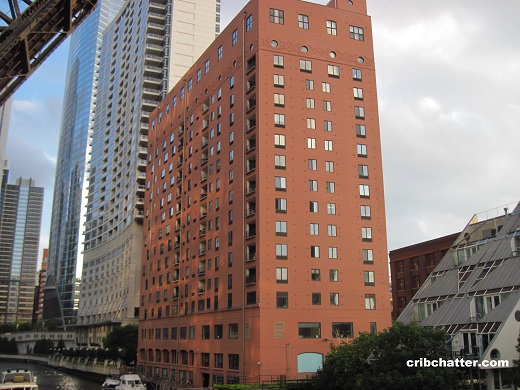
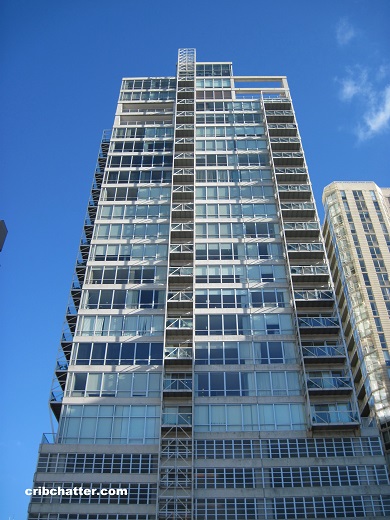
The above picture is of One Bennett Park at 451 E. Grand in Streeterville which has an apartment tower on the lower levels and luxury condos on the upper part of the building.
The rental building is currently offering 2 months free rent as an incentive.
Will COVID-19, and the economic recession, crash Chicago’s apartment boom?
Crain’s has the story.
“It kind of looked like the car was headed off to the ditch,” said DeVries, senior managing director at Integra Realty Resources, a Chicago-based appraisal and consulting firm. “We hit the brakes, and it looks like we’re not going to get into a big wreck.”
First, the bad news: The downtown apartment boom is over. The average net rent at top-tier, or Class A, downtown apartment buildings fell to $3.01 per square foot by mid-May, down 7.7 percent from first-quarter 2019, according to Integra. That was the biggest quarterly drop since at least 2001, even bigger than the declines during the last recession. Integra’s 2020 data runs through mid-May because the firm was unable to collect data after the end of the first quarter because of the coronavirus.
Absorption, which is the number of apartments rented in the quarter, was just 325 apartments over a 4 month period. That’s the lowest since 2012.
What about current tenants not paying rent?
Another positive: Though the number of tenants not paying their rent has risen over the past three months, rent delinquencies downtown generally are not high enough to be a major concern. Downtown high-rise apartment dwellers tend to be employed higher-income white-collar workers who are not struggling to pay their bills.
Crain’s checked in with Wolf Point East, the new luxury tower on Wolf Point with 698 apartments.
It started leasing just as the pandemic hit.
Surprisingly, leasing volume is on pace with the developers’ forecast, and rents are actually a little higher than projected, Galvin said. He expects to have half the units leased in “the near term,” he said, declining to be more specific. Average asking rents for an apartment at Wolf Point East range from $2,207 per month for a studio to $9,250 for a three-bedroom unit.
One statistic to keep an eye on is how many people are moving to Chicago from out of town. At Luxury Living, which is leasing Wolf Point East and several other buildings, renters moving to Chicago from other cities fell 22%.
Occupancy fell to 91.8% in the quarter, which was just a 3 year low and wasn’t as low as the financial crisis level.
Has Chicago avoided a downtown apartment crash? Or is one still to come?
Some landlords remain nervous.
Tony Rossi Sr. isn’t so sure. Rossi, who leads companies that develop, own and manage apartments, is “reasonably nervous” about the future, citing uncertainty over the direction of the job market and the country’s ability to contain the coronavirus.
He worries that many young professionals who moved back home with their parents in recent months won’t return and renew their leases in downtown buildings. One multifamily tower in which Rossi is an investor, at 73 E. Lake St., has a meaningful number of graduate students, many from overseas.
“You have to say ‘Are they coming back?” said Rossi, president of M&R Development, an apartment developer, and chairman of RMK Management.
“We did OK in May, we did OK in June,” he said. “But I just don’t like where we’re headed.”
Downtown apartment market slumps, but it could be worse [Crain’s Chicago Business, by Alby Gallun, June 26, 2020]