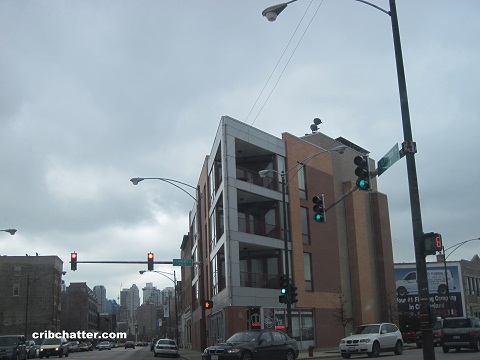
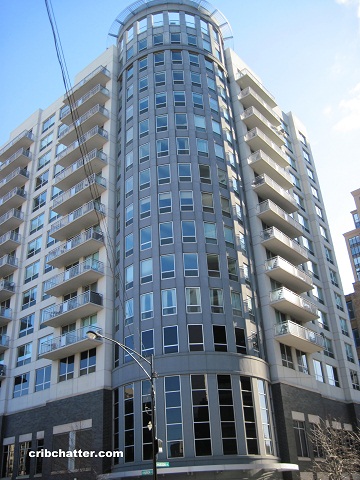
We’ve been chattering for awhile that the upper bracket in the Chicago housing market seems to be much stronger than other tiers of housing.
Recently, a $4 million house sold (actually closed) in Lincoln Park. Several other multi-million dollar condos have also sold and one priced at nearly $10 million is under contract.
Reuters explains that the rich are back and buying housing again, not just in New York, but in Chicago too.
Like an increasing number of well-heeled Americans, the Hodgsons decided it was time to buy a new home, even if most of the U.S. housing market remains in the dumps.
After years in an apartment building, “we were just tired of sharing space with other people,” says Cari Hodgson, 32. “It was time to have space of our own.”
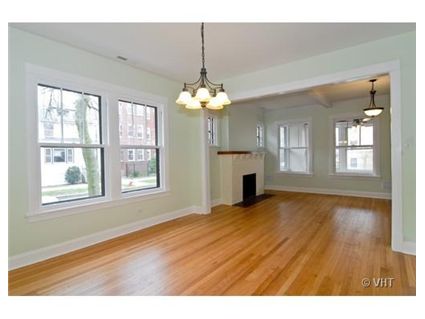
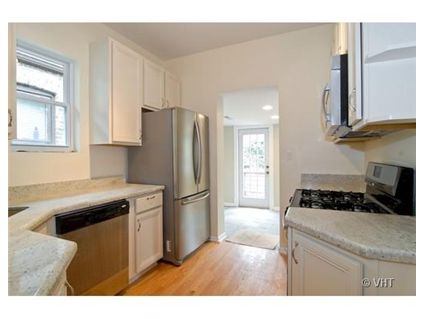
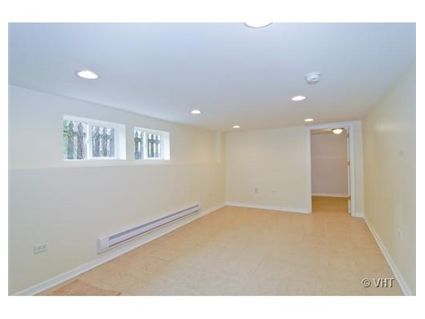
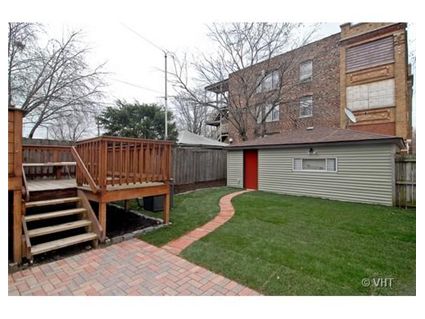
She and her commodities trader husband sold the condo and recently bought a $1.2 million, five-bedroom home in Chicago’s north side, sealing the deal with the kind of big down-payment that is heating up the high-end of the U.S. property market.
Cari, a part-time nurse, declined to say how much of their own money the couple put into the house. But she did say the mortgage was less than a so-called jumbo loan, which are bigger than most U.S. mortgages and currently start at $730,000.
That means the Hodgsons put down at least 40 percent of the house’s value, a chunk far out of reach for most Americans.
“We were told by a number of people that it was very difficult to qualify for a jumbo loan,” Cari Hodgson said. “So we didn’t even try to get one.
As the bulk of the market remains hobbled, the contrast with the high end is sharpening.
Mike Sato of Chicago-based Jameson Sotheby’s International Realty, cites the recent sale of a $4.5 million home not even built yet as a sign of the change among rich clients.
“I haven’t seen a deal like that since 2008,” he said.
High-end borrowers find it easier to get credit but even for them it is not guaranteed.
Matt Farrell, managing partner at Urban Real Estate in Chicago, recounted how a buyer with good credit and seeking a loan for a $2 million home was unable to secure a mortgage in time. So the buyer wired cash to pay for it with no loan.
“After the banking sector was infused with all that government cash to go out and lend more money, you’d think we’d be seeing more activity out there,” Farrell said. “But when someone who can pay $2 million in cash can’t get a loan, then you know you have a real problem.”
While sales are rising in the upper bracket, they are also hot in the lowest bracket as investors race to buy foreclosures under $100,000.
What’s left?
Everyone in between.
We have chattered about the difficulty in selling in the $400k to $800k range due to tougher loan requirements, including the need for bigger downpayments. The downpayment requirements makes the pool of buyers much smaller.
Properties worth between $100,000 and $500,000 make up more than 60 percent of U.S. housing. Sales in that category in March were down across every region of America from the same month a year earlier, when tax breaks were propping up demand.
Foreclosures and short sales — whereby struggling homeowners sell their homes for below what they owe, with the consent of their lenders — are still a big drag. Credit remains tight and middle-income families are more pessimistic than their wealthier compatriots about the economy.
“It’s kind of quiet right now,” said Fred Arnold, president of lender American Family Funding. “There’s no real excitement out there that we are used to seeing in the springtime.”
As we’ve also chattered about, there is a standoff between sellers who aren’t going to “give it away” and buyers who want a deal. It means some properties stay on the market for years.
“Buyers still think properties are too expensive and want bigger discounts,” said Mario Greco, a Chicago-based realtor. “Sellers are still not ready to take their lumps yet and recognize what their property is worth in today’s market.”
And what about those that don’t have all cash and need to get that loan?
“It’s difficult, and getting more difficult,” said Bob Walters, chief economist at Quicken Loans in Detroit. “All the moves whether it be regulatory, underwriting, pricing — I can’t think of an exception — all of them are pointing toward making it more challenging to get a loan.”
The government-rescued housing finance giants Fannie Mae and Freddie Mac tightened up lending standards in 2007 and 2008 as bad loans began to soar and there has been a steady drip of new requirements since then. More changes to credit rules are under discussion and could constrain lending further.
Keith Klein, a mortgage loan consultant at Bank of Blue Valley, a local lender in Overland Park, Kansas, said tougher underwriting standards mean that if prospective buyers cannot put down 20 percent, they cannot get a mortgage.
Will we see a two-tier market where the million dollar property prices move higher while the rest of the market continues to see price declines?
Some signs of life in housing, credit drought goes on [Reuters, Nick Carey, Apr 25, 2011]