The Chicago Tribune discussed what parts of Chicago real estate are “hot” or “not” in its real estate section on Friday. (This is the article that Steven linked to.)
Apparently, no area is truly “hot” but the downtown market is holding up fairly well.
Lance Ramella, principal at Meyers Builders Advisors, summed up the sentiment of most who work in a residential real estate industry whose flagging fortunes have been well-documented.
“I wouldn’t call any market, in Chicago and anywhere else in the country right now, hot right now,” Ramella said. “Some markets are just better than others and it’s a relative term. Being better than horrible, that’s where we’re at.”
The experts say, it’s all about location, location, location. We’ve seen that as well, as more foreclosures are appearing in the outlying areas such as Rogers Park, Edgewater or Bronzeville than are appearing in Lincoln Park or Lakeview.
The “experts” like the Millennium Park/Loop area, although we’ve seen some foreclosures in buildings like The Columbian already.
Between this year and next, about 10,000 condominium units will come on the downtown market, creating a glut of inventory. Still, Gail Lissner, vice president of Appraisal Research Counselors, favors properties that are either close to North Michigan Avenue or are near the lake and with a view, properties loosely bounded by the Chicago River on the west, Randolph Street on the north and Roosevelt Road on the south.
“Right downtown, the whole quarter around Millennium Park, that whole area has a lot of legs around it,” she said. “It offers such a unique location and view amenity. You can’t go replicate this location at 10 other spots in the city.”
The Gold Coast is apparently one of the “hot” areas right now.
Chicago’s Gold Coast, comprised of residences in the 60611 ZIP code, also remains one of the better markets. Between Jan. 1 and April 30, 371 properties sold with a median selling price of $526,000, according to data from Midwest Real Estate Data LLC. That compares with 332 properties selling at a median price of $414,688 during the same period a year ago.
What these stats don’t tell us is the mix of the properties that were sold. Are these re-sale units or do these also include new construction? Even just one new highrise building closing could skew those statistics.
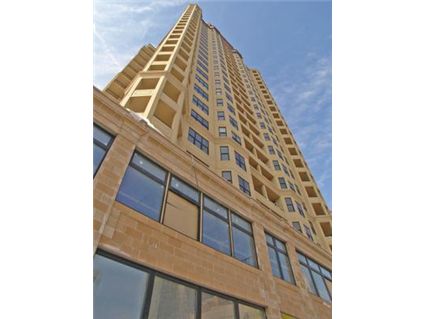
50 E. Chestnut, the luxury high-rise near Rush Street that has 34 units with only one unit per floor, has been closing on units in recent months. If that building is within the Gold Coast zip code, it would have only taken a few of those closings to skew the price stat.
The article says the South Loop is doing just fine. (Really?) And, of course, you can’t go wrong with Lincoln Park (which I think most chatterers would agree with.)
Meanwhile the South Loop, the scene of much of the current development activity, continues to hold its own. Sales are up from a year ago while average market time is down and the median selling price is relatively unchanged from a year ago.
“If the market is a little tighter, you’re better off investing in what would be considered a better area,” said Michael Golden, co-founder of Chicago-based brokerage @properties. “The best areas always perform the best. Lincoln Park is always going to be Lincoln Park, the Gold Coast is always going to be the Gold Coast. There’s always going to be up-and-coming areas [but] you’re betting a little bit.”
The article admits the up-and-coming areas are getting hit and getting hit hard. Take East Garfield Park which has great housing stock that is being refurbished. It’s near the Green Line and is a quick commute to downtown. But there was lots of speculation and “investment” that went on there in the past few years. It’s now falling back down to earth.
I’ve seen a pick-up in foreclosures in that neighborhood recently.
That means Chicago neighborhoods considered ripe for gentrification just two years ago aren’t so hot anymore. In March 2007, Business Week named East Garfield Park on the city’s west side as one of the nation’s 10 hottest housing markets. But a year later, there have been far fewer properties sold, the median price has been slashed in half and the marketing time has almost doubled.
When you read this article it makes you wonder where the reported 30% drop in sales year-over-year in the city in the first quarter even comes from.
Read the full article: Hot real estate market versus one that’s not [Chicago Tribune, June 6, 2008]